Personal project · Private family archive
Family
Archive
A place for the parts of family history that a family tree cannot hold.
- ~9,000
- people across two family lines
- Private
- invite-only family history
Traditional genealogy is good at recording who, where, and when. I am building Family Archive to preserve the stories, photographs, recipes, traditions, relationships, and context that make those people feel real.
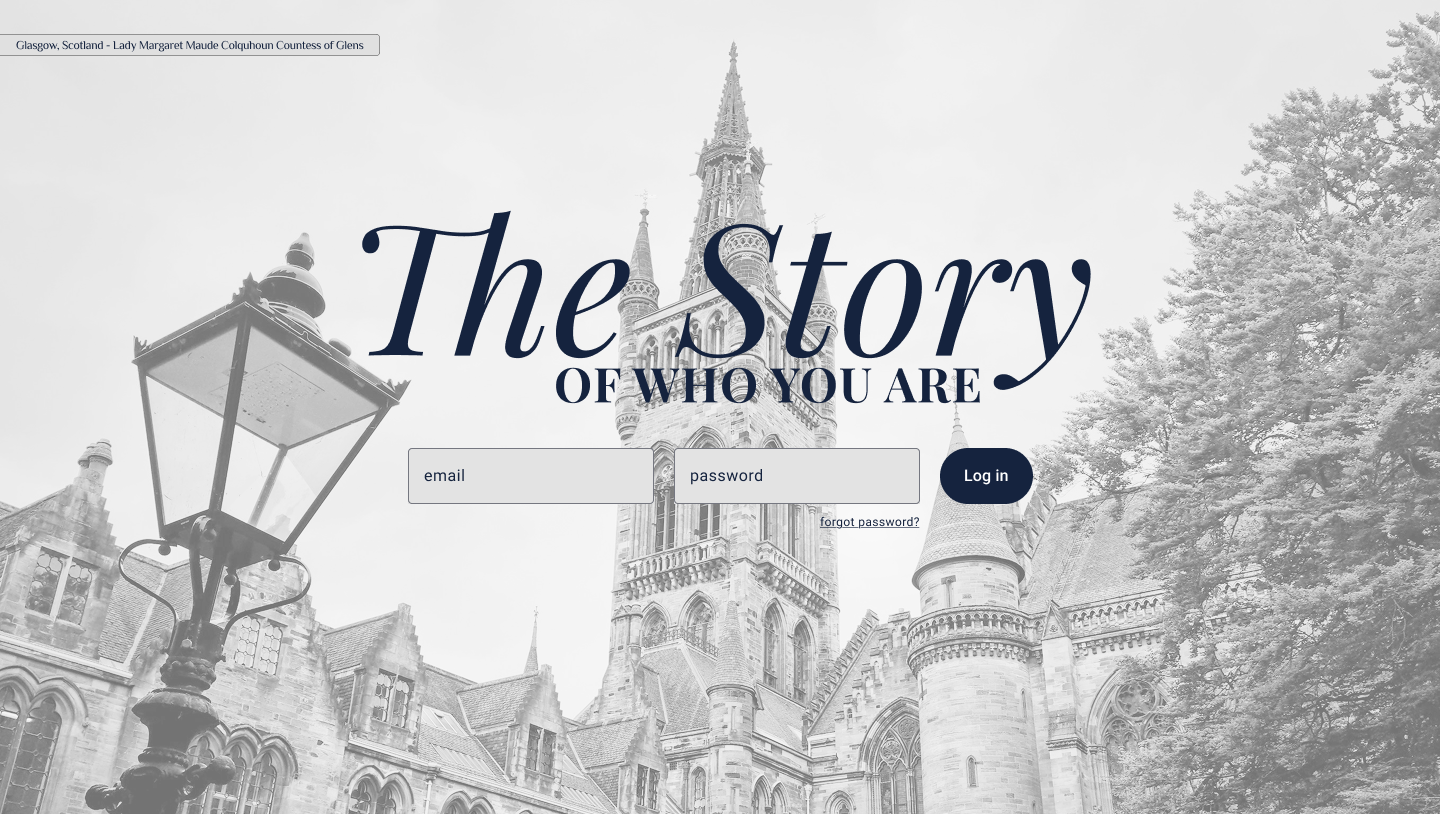
Chapter 01: Why I'm building it
Family history gets distributed across houses, boxes, inboxes, memories, and relatives. Over time, it gets harder to know who has what, and some of it may already be impossible to recover.
I am building the archive for my kids and family so the official record can sit beside the details that only survive because someone remembered to tell them.
Records show that my grandfather moved from Kansas to California. His son remembered that he worked as a baker for twenty-five cents a day. He once found a shovel head at a dump, carved a handle for it, and kept using it. Those are the details I want the next generation to be able to find.
Chapter 02: More than a family tree
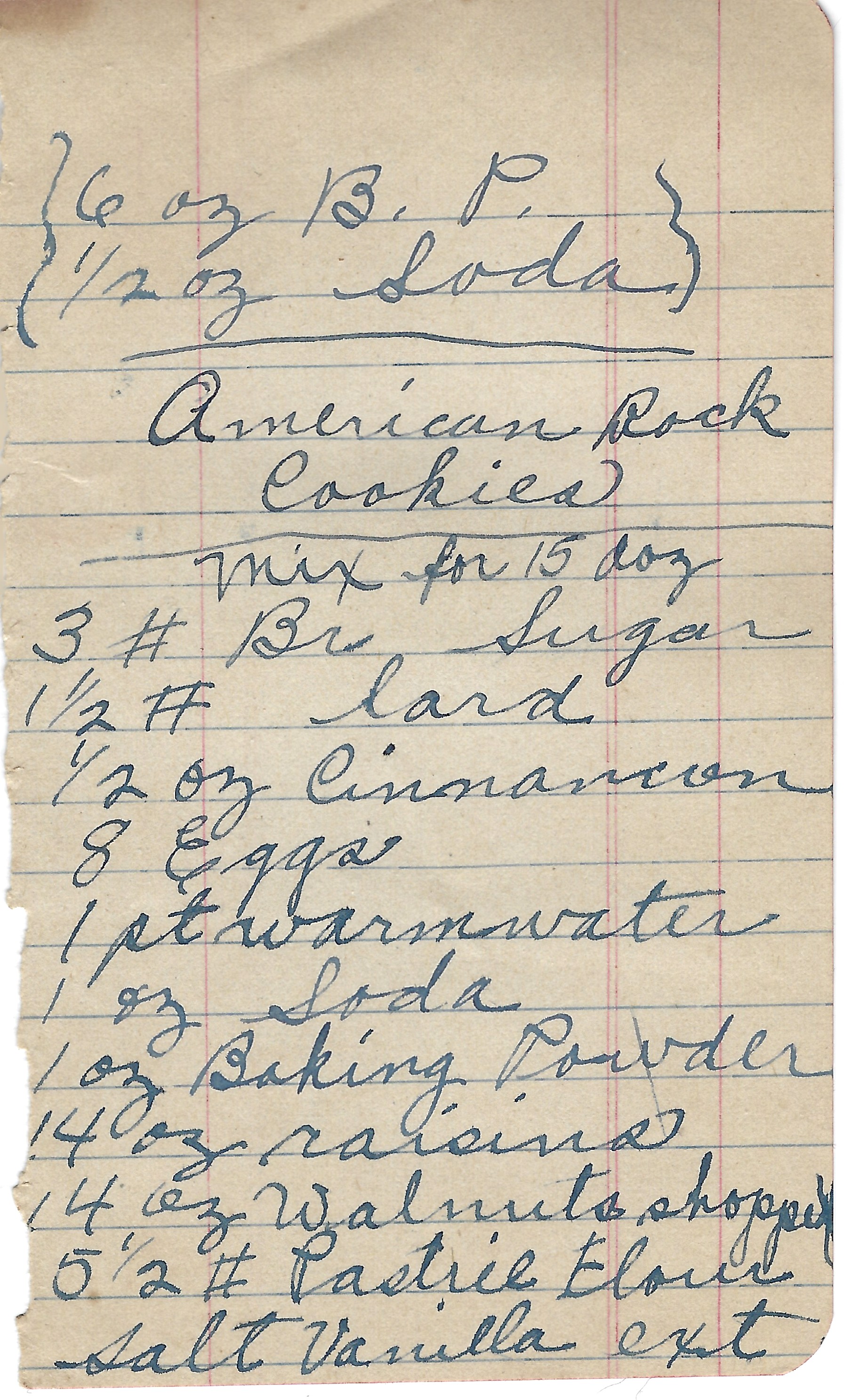
Lineage is only one part of a family history. The archive also holds handwritten recipes, photographs, records, places, traditions, and the context that makes each artifact useful.
Ralph's American Rock Cookies recipe keeps his handwriting, spelling, shorthand, and commercial-scale quantities. It yields fifteen dozen cookies. There is no oven temperature or baking time, and the salt and vanilla have no measurements because he did not need those details written down.
The archive preserves the card as Ralph wrote it and provides a usable digital interpretation beside it. Missing information stays visible instead of being quietly filled in.
Artifact ↔ interpretation
Chapter 03: Making 9,000 people navigable
~9,000
people across both sides of the family
Nearly nine thousand people creates an orientation problem. The archive centers itself around the family member who logs in, then helps them understand who someone is to them, which side of the family they are seeing, and how to move through generations without losing their place.
That point of view shapes the tree, profiles, branch identification, global search, and relationship finding. Privacy also matters here: living relatives remain obscured when the work is shown outside the family.
- 01
Scale
A wide tree view makes several generations visible without reducing the family to a list.
- 02
Orientation
The logged-in family member stays visually distinct so the graph always has a clear point of view.
- 03
Branching
Branch colors stay attached to people and relationships, helping someone read which side of the family they are moving through.
- 04
Pathfinding
Search and relationship finding can explain the route between two people instead of leaving the connection to be inferred.
Chapter 04: Designing and building it
I designed the experience and established the product's visual direction, then used AI-assisted coding to help implement it on a stack I had not worked with before: Laravel, PHP, and MySQL on shared hosting.
The work remains iterative: define a behavior, review the result, test it against real family data, find where it breaks, and change the approach. Modern tools help me move through the unfamiliar stack. They do not replace product decisions, testing, or the judgment to rebuild something that is not working.
- 01
The visual direction changed
Early builds used framework defaults. I designed the landing page in Figma, then let its navy, warm cream, gold, photography, and type become the authority for the rest of the product.
- 02
The plan changed
A flow-mapping pass showed that I had scheduled print and export work before the content those features depended on existed. I reordered the backlog around the real dependencies.
- 03
The implementation changed
The first tree approach failed at the job it needed to do. Replacing it was more useful than polishing a structure that made relationships harder to follow.
Design into implementation
The resolved visual direction became a concrete standard for judging the build, not a beauty shot added after the product worked.
Chapter 05: A living archive
The private site now brings the family directory, tree, profiles, photographs, recipes, records, places, traditions, uploads, relationship finding, and recipe printing into one place. The point is to make the material easy enough to explore that the stories stay connected to the people they belong to.
Family members can keep adding photographs, corrections, memories, and the details that never made it into an official record. The archive can become richer without cleaning away the uncertainty and shorthand that make the source material human.
- 01Profiles and biographies
- 02Stories and photographs
- 03Recipes and traditions
- 04Records and documents
- 05Places and local context
- 06Interactive family tree
- 07Relationship finding
- 08Family contribution uploads
- 09Invite-only registration
- 10Recipe printing
Future work
A family book from any person's perspective
The archive already centers itself around the person who logs in, and recipe printing is built. A future step is to let a family member choose any person as the point of view, gather the connected stories and artifacts, and generate a family book that can be printed and passed on.
Timeline + map
The place is part of the record
A person's history is tied to places as much as dates. Ralph's record already traces him from Kansas to California, and I am still adding what the family can recover. Each new residence, document, or story fills in a little more of the map.
A living record, built to grow